Browsing by Genre on NetShort? A Quarter of Series Are Not Labelled With the Shelf They Are On
NetShort files every series on browse shelves and also prints labels on the series page. We compared the two for 721 series: 45% of shelf placements use a label the series itself does not carry, and on some shelves that is nearly every title.
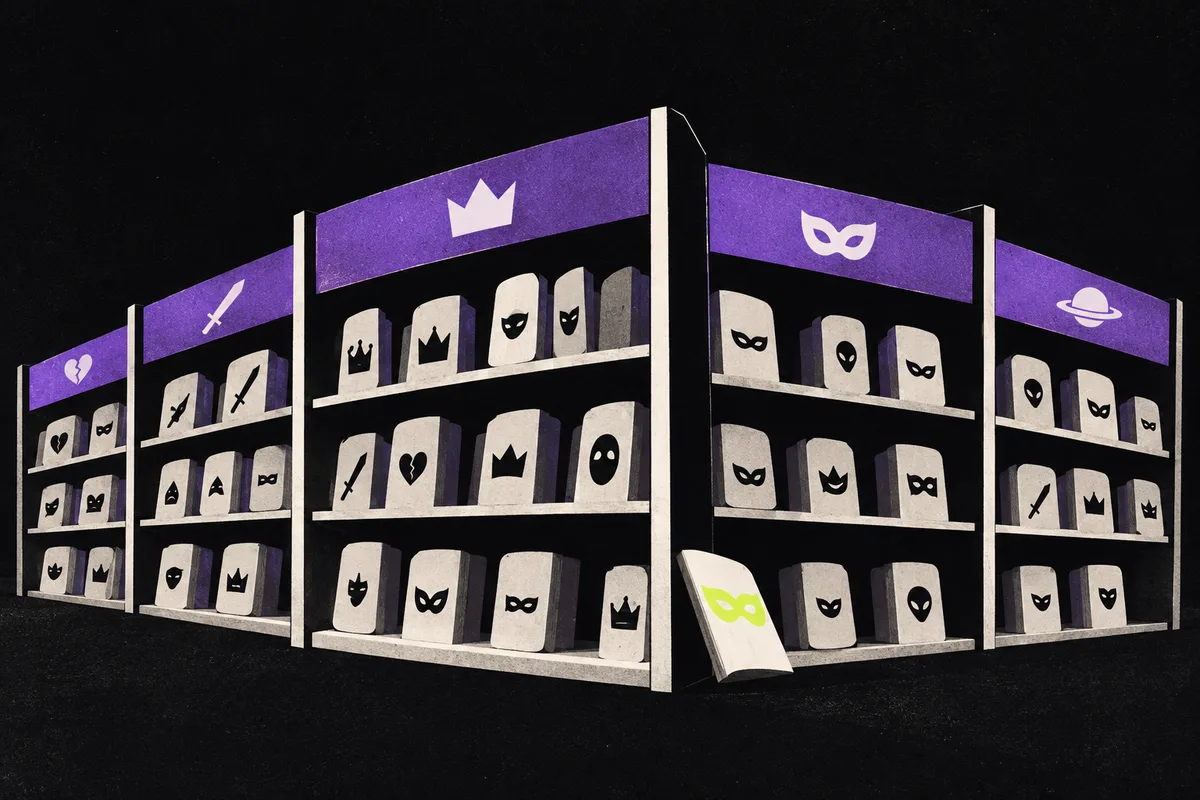
NetShort describes every series twice. It puts the series on browse shelves — Revenge, Feel Good, Historical, and 37 others — and it prints a short list of labels on the series’ own page.
You would expect those two to agree. For a quarter of the catalogue, they do not.
What we compared
For the 721 NetShort series we read (717 of them are in our database; the rest fell out at a later check), we recorded two things while reading the catalogue: which genre browse pages the series turned up on, and which labels its own page carries. Then we checked whether the shelf’s name appears in the series’ own label list.
| Series with both a shelf and page labels | 721 |
| Shelf placements in total | 1,411 |
| Placements where the shelf’s label is not among the series’ own labels | 633 (44.9%) |
| Series where none of its shelves matches any of its own labels | 187 (25.9%) |
So nearly half the time NetShort files a series under a heading the series does not claim for itself, and one series in four is not labelled with any of the shelves we found it on.
Three examples, with the shelf first and the series’ own labels second:
- (Dubbed) I Became Martial King Through Massage! — shelved under Superpowered; its page says Martial Arts, Good vs. Evil.
- (Dubbed) The Trash Son Returns as a God — shelved under Historical; its page says Rebirth, Hype, Eastern Fantasy.
- (Dubbed) Trust Me or Die — shelved under Apocalyptic; its page says Love Triangle, Mystery, Revenge.
None of those is absurd. A martial arts hero probably is superpowered. But if you are browsing the Superpowered shelf because you want superpowers, the series you are looking at does not describe itself that way, and nothing on its page will tell you why it is there.
Some shelves are reliable, others are almost decorative
The disagreement is not spread evenly. Counting only shelves where we recorded at least twenty placements:
| Shelf | Placements | Shelf label missing from the series’ own labels |
|---|---|---|
| Alternate History | 24 | 92% |
| Modern | 24 | 88% |
| Feel Good | 48 | 75% |
| Historical | 32 | 72% |
| Love After Divorce | 24 | 71% |
| Good vs. Evil | 23 | 70% |
| … | ||
| Coporate Warfare | 36 | 25% |
| Revenge | 94 | 24% |
| One Night Stand | 24 | 21% |
| Life OL | 24 | 21% |
| Rebirth | 52 | 19% |
| Forced Love | 24 | 17% |
Revenge and Rebirth are shelves you can trust: three-quarters or more of what sits on them carries the same word on its own page. Alternate History and Modern are not: almost nothing on them is labelled that way by the series itself.
There is a pattern in which shelves behave. The reliable ones name a plot mechanic — revenge, rebirth, a forced marriage, a one-night stand. The unreliable ones name a mood or a setting — feel good, modern, historical, alternate history. A mechanic is either in the story or it is not. A mood is a judgement, and the two parts of NetShort’s own system make it differently.
Why this happens, as far as we can tell
Two structural details explain most of it.
The page label list is nearly a fixed format. Of the 721 series, 657 carry exactly three labels. Fifty-one carry two and eight carry one. When a series is allowed three labels and no more, the fourth true thing about it does not get said — but a shelf can still be built on that fourth thing.
Shelves are a separate filing job. We found 395 of the 721 series on a single shelf and the rest on two to seven, so shelving is broader than labelling for some series and narrower for others. Either way it is a second decision, made somewhere else, and nothing forces the two to line up.
We cannot see who makes either decision or in what order. What we can see is the result: the shelf and the page are two different descriptions of the same series, and they disagree about as often as they agree.
What this means when you browse
- A genre shelf is a suggestion, not a property of the series. On the mood-style shelves especially, treat it as “someone filed this here”, not “this series is that”.
- The series page is the stricter of the two. Its three labels are what the platform is prepared to say about the series itself.
- If a shelf disappoints you, the label is worth checking. A Feel Good shelf where three-quarters of the titles do not carry that label will feel inconsistent, because it is.
How our pages differ from NetShort’s shelves
This matters for reading anything on this site, so we will be explicit about it.
Our genre pages are built from the labels on each series’ own page, not from the platform’s shelves. A series appears under Rebirth here because its page says Rebirth. That makes our shelves narrower and more literal than NetShort’s browse menu: the 24 series we found on the Alternate History shelf, for instance, mostly do not appear under that heading here, because their own pages do not use the label.
Neither version is the “true” one. They answer different questions — where did the platform put it and what does the platform say it is — and until now nobody had published how far apart the two answers are.
The limits of this comparison
We only see the shelves we visited. Our record of a series’ shelves comes from the 40 browse pages we read. A series may well sit on other shelves we did not open, so we never claim a list is complete. That is why every figure above is stated in one direction only: how often a shelf we did see uses a label the series does not carry. That direction is unaffected by shelves we missed.
This is NetShort only. ShortMax gives each series a single genre and no browse-versus-page comparison is possible; ReelShort publishes no labels we can use. How the three differ is its own page.
Nothing here says a placement is wrong. A shelf can be a perfectly good editorial decision and still not match the label list. What we measured is disagreement, not error.
Every figure comes from NetShort’s own browse pages and series pages, read on 23 August 2026, for the 721 series in the catalogue behind our database.